The Night Agent Vocabulary S01E07
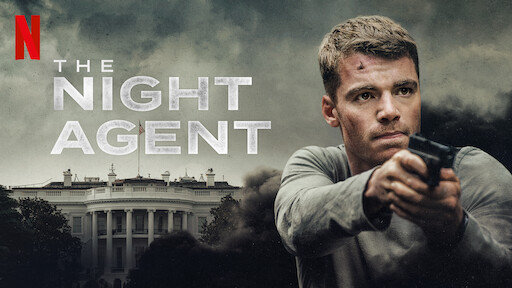
Studying vocabulary before watching a TV show can greatly enhance your understanding and enjoyment of the content. By familiarizing yourself with key words, phrases, and jargon specific to the show, you will be better equipped to follow the plot, grasp character dynamics, and appreciate nuanced dialogue. In the case of “The Night Agent,” a TV show, it is advisable to prepare for the first episode by learning some relevant vocabulary.
Below are some vocabulary and jargon terms that you may encounter in the first episode of “The Night Agent” Season 1 Episode 7
Links for The Night Agent
All Vocabulary Post for The Night Agent
Jargons and their explanations:
a) Countersurveillance: Countersurveillance refers to the measures taken to detect and prevent surveillance or spying activities. It involves techniques and practices used to identify and counteract surveillance efforts by individuals or organizations.
b) Bug up one’s ass: This is an informal expression that means someone has an obsessive or persistent interest or fixation on something. It implies that the person is overly focused or bothered by a particular topic or issue.
c) Framed: In this context, “framed” refers to the act of falsely incriminating someone by setting them up or manipulating evidence to make it appear as if they are guilty of a crime they did not commit.
d) Doomscrolling: Doomscrolling is a term used to describe the act of continuously and obsessively scrolling through negative or distressing news or social media feeds, often leading to feelings of anxiety, helplessness, and despair.
e) Smoke and mirrors: This is an idiomatic expression that refers to the use of deception or trickery to create a false impression or divert attention away from the truth. It implies that something is not as it appears and is meant to mislead or confuse.
f) Black hat: In the context of hacking and cybersecurity, a black hat refers to a hacker who engages in malicious or illegal activities, such as unauthorized access, data theft, or system disruption, for personal gain or malicious intent. Black hats are typically contrasted with white hats, who are ethical hackers working to improve security.
CEFR B2 and above vocabulary in The Night Agent:
- Counterintelligence: The agency’s counterintelligence division focuses on detecting and countering espionage and foreign intelligence activities.
- Incriminate: The evidence found at the scene of the crime could potentially incriminate the suspect.
- Manipulate: The politician was accused of manipulating public opinion through deceptive tactics.
- Fixation: She had a fixation on cleanliness and would spend hours cleaning her house.
- Incriminating: The incriminating documents were presented as evidence during the trial.
- Obsessive: He had an obsessive interest in collecting stamps and would spend all his free time on it.
- Deception: The magician used sleight of hand to create an illusion of deception.
- Trickery: The con artist used various forms of trickery to swindle unsuspecting victims.
- Malicious: The computer virus was designed to cause malicious damage to infected systems.
- Unauthorized: He accessed confidential files using an unauthorized login, violating the company’s security protocols.
Sentence examples:
- The counterintelligence agency plays a crucial role in protecting national security from foreign espionage.
- The new evidence could potentially incriminate the defendant and strengthen the case against him.
- He manipulated the data to support his argument, distorting the facts to fit his narrative.
- Her fixation on perfection often caused her stress and prevented her from enjoying life.
- The incriminating photographs were enough to convict the suspect of the crime.
- His obsessive behavior towards cleanliness made it difficult for him to relax in messy environments.
- The illusionist used deception and misdirection to create awe-inspiring magic tricks.
- The con artist’s elaborate trickery fooled many unsuspecting victims into giving him their money.
- The malicious software infected thousands of computers, causing data loss and system failures.
- The employee was fired for accessing sensitive company information using an unauthorized account.
Note: CEFR (Common European Framework of Reference for Languages) B2 level is considered an upper-intermediate level of proficiency in the English language. The vocabulary provided above includes words commonly used at this level and beyond.
0 Comments